
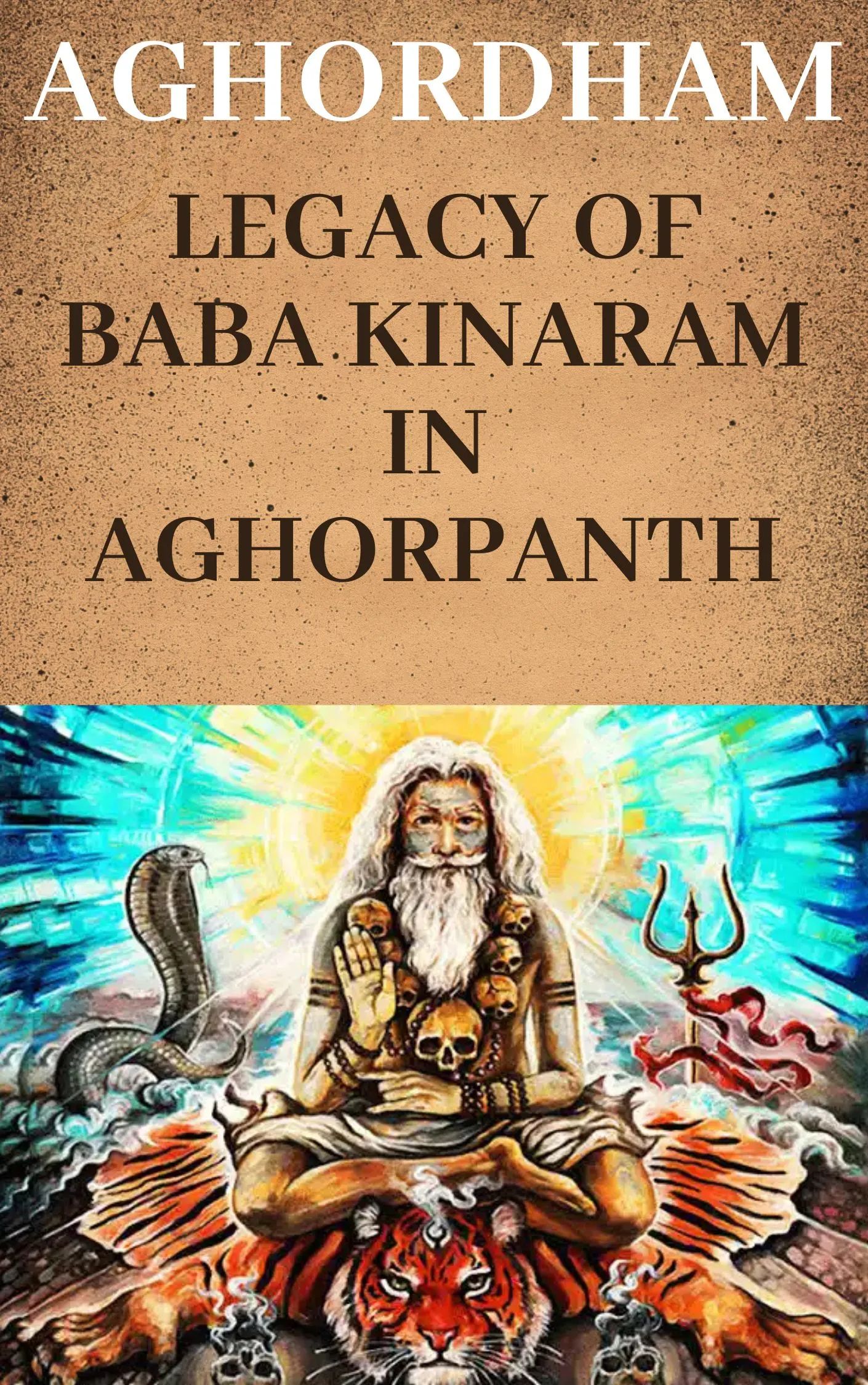
Aghor Panth: History, Philosophy, and the Spiritual Legacy of Baba Kinaram
Sanatan Hindu Dharma (सनातन हिन्दू धर्म) has never been a rigid or single-path belief system. Over thousands of years, it evolved through time (काल), society (समाज), and the spiritual experiences of seekers (साधकों का ज्ञानानुभव). Because of this evolution, many Panths (पंथ) and Sampradayas (सम्प्रदाय) emerged, each offering a unique spiritual path toward liberation (मोक्ष).
Among these, Aghor Panth (अघोर पंथ) stands as one of the most mysterious, misunderstood, and powerful Shaiva traditions of Sanatan Dharma.
Meaning of Panth and Sampradaya
The word Panth (पंथ) refers to a spiritual path or method of practice, revealed by realized saints (सिद्ध संत).
A Sampradaya (सम्प्रदाय) is the organized spiritual lineage, formed by a teacher (प्रवर्तक) and followed by disciples (अनुयायी), meant to guide society toward truth (सत्य) and liberation.
Aghor Panth is not merely a belief system—it is a direct experiential path that seeks to understand life (जीवन), existence (जगत), and death (मृत्यु) through intense spiritual discipline (तप-साधना).
Who Are Aghoris?
Followers of Aghor Panth are known as Aghori (अघोरी) or Aughad (औघड़).
According to Aghori tradition, Lord Shiva (भगवान शिव) himself is the originator of this path.
Aghor Panth is deeply rooted in Shaivism (शैव मत) and is often associated with ancient Shaiva sects such as:
- Pashupata (पाशुपत)
- Kapalika (कापालिक)
- Kalamukha (कालामुख)
Among these, the Pashupata sect is considered the oldest Shaiva tradition.
Shaiva Roots in the Vedas and Puranas
The roots of Shaivism go back to the Rigveda, where Shiva appears in the form of Rudra (रुद्र).
In the Atharvaveda, Shiva is referred to as Bhava (भव), Sharva (शर्व), Pashupati (पशुपति), and Bhupati (भूपति).
Texts like:
- Vamana Purana (वामन पुराण)
- Basava Purana (बसव पुराण)
mention Shaiva sects and their sub-branches, including Shakta (शाक्त), Nath (नाथ), Dashnami (दशनामी), and Aghor traditions.
Shaiva ascetics have historically been known as Nath, Aghori, Aughad, Avadhuta (अवधूत), Yogi, and Siddha (सिद्ध).
The Philosophy of “Aghor”
The word Aghor (अघोर) comes from “Ghor (घोर)” with the prefix “A” (अ).
- Ghor means difficult, terrifying, rigid, unnatural
- A-Ghor means easy, natural, simple, effortless
Thus, Aghor Panth teaches the path of natural awareness (सहज मार्ग).
According to Aghori philosophy, every human is born simple and pure (सहज). But as life progresses, social conditioning, desire (काम), attachment (मोह), and illusion (माया) create inner distortions (विकार). This transforms the natural Aghor state into Ghor consciousness.
Through Aghor Sadhana, the seeker returns to their original state of simplicity and oneness.
Cremation Ground Sadhana and Symbolism
Aghor practices are often performed in isolated places (निर्जन स्थान) such as cremation grounds (श्मशान / अस्मसान). These practices are symbolic, not sensational.
Practices like Shava Sadhana (शव साधना) represent confronting fear, death, ego, and attachment directly. The goal is self-realization (आत्मबोध), not indulgence.
Origins: Nath Tradition or Gorakhnath?
Scholars differ on the historical origins of Aghor Panth.
- Some believe Aghor existed before the Nath Sampradaya
- European scholar Henry Balfour considered Guru Gorakhnath as its founder
- William Crooke traced its early spread from Mount Abu (राजस्थान) to Gujarat, Nepal, and Samarkand
Practices such as using skull bowls (कपाल पात्र) connect Aghor Panth with Kapalika and Kalamukha Shaiva traditions.
Dattatreya: The Supreme Guru of Aghor
While Shiva is regarded as the cosmic origin, Avadhuta Dattatreya (अवधूत दत्तात्रेय) is considered the living guru of Aghor Panth.
Dattatreya is viewed as the combined manifestation of Brahma, Vishnu, and Shiva.
Aghor belief states that Shiva pervades all—living and non-living (जड़-चेतन), and liberation is achieved by realizing this unity.
Baba Kinaram: The Torchbearer of Aghor Panth
The most influential historical figure in Aghor Panth is Baba Kinaram (बाबा कीनाराम).
- Born in Vikram Samvat 1684 in Ramgarh village, Chandauli (UP)
- From childhood, deeply inclined toward spirituality
- Renounced worldly life after personal tragedy
Through intense tapasya, miracles, and spiritual trials, Baba Kinaram revived and systematized Aghor Panth.
Initiation by Aghori Kalu Ram
At Kedarnath Shamshan Ghat (काशी), Baba Kinaram met Aghori Kalu Ram, believed to be Dattatreya himself in disguise.
After rigorous tests, Kinaram received Aghor Guru Mantra. According to belief, Kalu Ram disappeared after initiation.
A famous verse explains this mystery:
“Keena keena sab kahe, Kalu kahe na koi
Kalu Keena ek bhaye, Ram kare se hoy”
Literary Contributions of Baba Kinaram
Baba Kinaram authored several spiritual texts, including:
- Vivek Saar (विवेक सार)
- Ram Gita (राम गीता)
- Ram Rasala (राम रसाल)
- Gitavali (गीतावली)
These texts discuss cosmic mysteries (सृष्टि रहस्य), body-cosmos relation (पिंड-ब्रह्मांड), Nada (अनाहत नाद), Yoga, Sahaj Samadhi (सहज समाधि), and compassion (दया).
Branches of Aghor Panth
Aghor Panth later divided into three branches:
- Aghor
- Ghur
- Sarbhanga (सरभंग)
The Sarbhanga sect is prominent in Champaran, Saran, Muzaffarpur (Bihar) and Terai regions of Nepal.
Conclusion
Aghor Panth is not a cult of darkness but a path of radical acceptance and ultimate truth. It teaches that nothing in existence is impure—only perception is limited.
By transcending fear, duality, and illusion, the Aghori seeks absolute freedom (कैवल्य) and liberation (मोक्ष).