
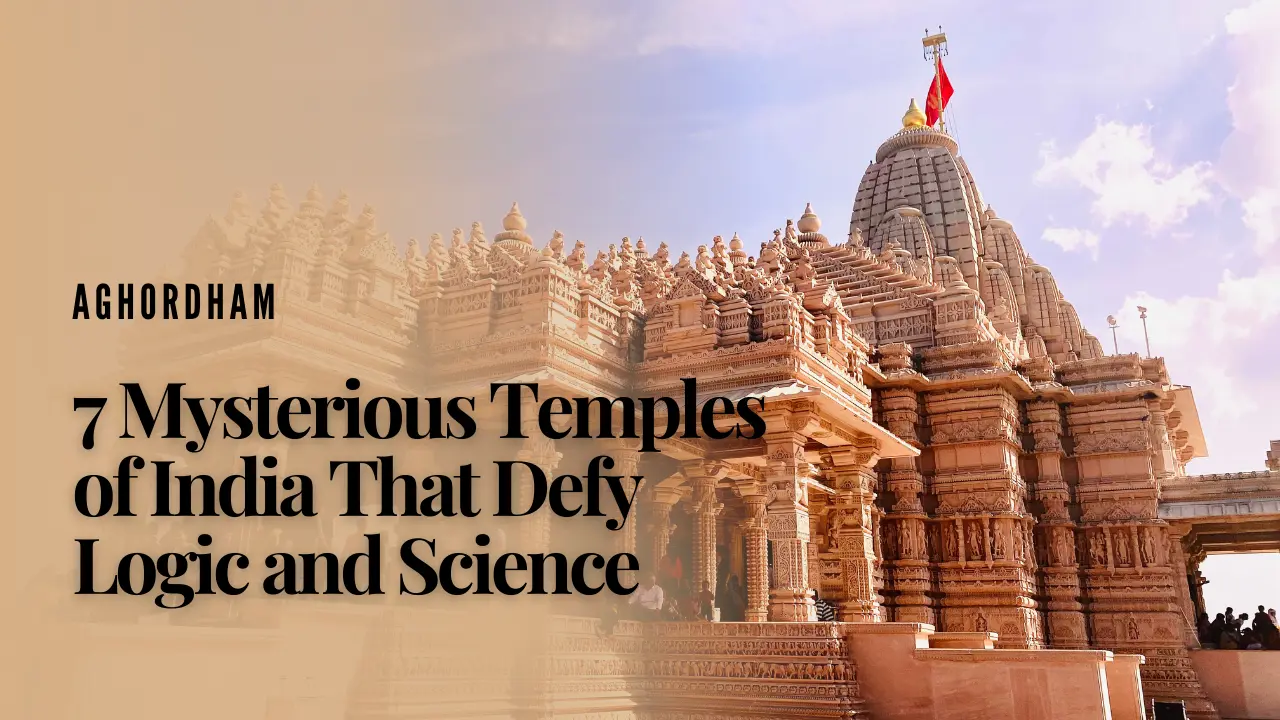
7 Mysterious Temples of India That Defy Logic and Science
Mysterious Temples of India
India is not just a land of faith—it is a land of unsolved mysteries. Across the country, ancient temples exist where science pauses, logic bends, and spirituality begins. These temples are surrounded by supernatural events, unexplained phenomena, and architectural wonders that modern research still cannot fully decode.
In this blog, we explore 7 mysterious temples of India that continue to puzzle scientists, historians, and devotees alike.
Table of Contents
1. Kamakhya Temple, Assam – The Temple Where the Goddess Bleeds
📍 Location: Guwahati, Assam
Kamakhya Temple, one of the most powerful Shakti Peethas, represents divine femininity and fertility.
🔍 The Mystery:
- No idol is worshipped—only a yoni-shaped stone
- Every year during Ambubachi Mela, the temple closes for three days
- A natural spring inside turns reddish, believed to symbolize the goddess’s menstrual cycle
Despite scientific theories, the exact cause remains unexplained.
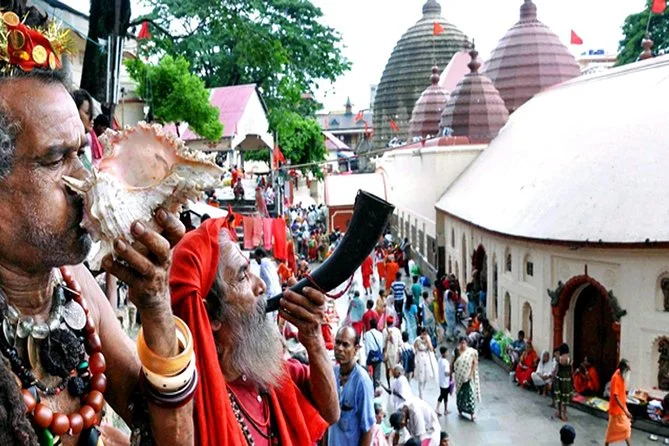
Kamakhya Temple sanctum / Ambubachi Mela
Ambubachi Mela Begins at Kamakhya Temple, Assam
The sacred Ambubachi Mela has commenced at the renowned Kamakhya Temple in Assam. This annual festival holds immense spiritual significance as it commemorates the yearly menstruation of Goddess Kamakhya, symbolizing fertility, creation, and the cyclical nature of life. Devotees, saints, and Tantrik practitioners from across India and abroad gather at this time, making it one of the most important spiritual events in Eastern India.
Kamakhya Temple: One of the Oldest Shakti Peethas
The Kamakhya Temple is considered one of the oldest and most powerful of the 51 Shakti Peethas. Along with Goddess Kamakhya, the temple complex also houses shrines dedicated to Lord Shiva and Lord Vishnu. It is a major centre of Tantrik worship, where ancient spiritual practices are still actively followed.
Location and Historical Background
The temple is located in Assam, atop the Nilachala Hills in Guwahati, overlooking the Brahmaputra River. Historically, the original structure of the temple was destroyed by Kala Pahar. Later, in 1565, the temple was reconstructed by Chilarai, the general and reigning ruler of the Koch dynasty, restoring its spiritual and cultural prominence.
Unique Temple Architecture – Nilachala Style
The architecture of Kamakhya Temple is a unique blend of Nagara (North Indian) style and Saracenic or Mughal architectural elements. This distinctive combination is known as the Nilachala Style of Architecture. Notably, it is the only temple in Assam with a fully developed ground plan, reflecting advanced architectural planning of its time.
Structural Layout of the Temple
The temple complex consists of five distinct chambers, each serving a specific religious and cultural purpose:
- Garbhagriha – the main sanctuary
- Antarala – the vestibule
- Jagan Mohan – the principal chamber
- Bhogmandir – the ritual and offering chamber
- Natmandir – the opera hall used for traditional dance and music performances
Each chamber’s superstructure displays distinct architectural features, adding to the temple’s uniqueness and spiritual aura.
2. Mehandipur Balaji Temple, Rajasthan – The Temple of Exorcism
📍 Location: Dausa, Rajasthan
This temple is famous for curing spirit possession and black magic effects.
🔍 The Mystery:
- Devotees exhibit extreme physical and emotional reactions
- Rituals involve loud chanting, strict offerings, and sudden behavioral changes
- Many claim instant relief after rituals
Medical science struggles to explain the mass transformations witnessed here.
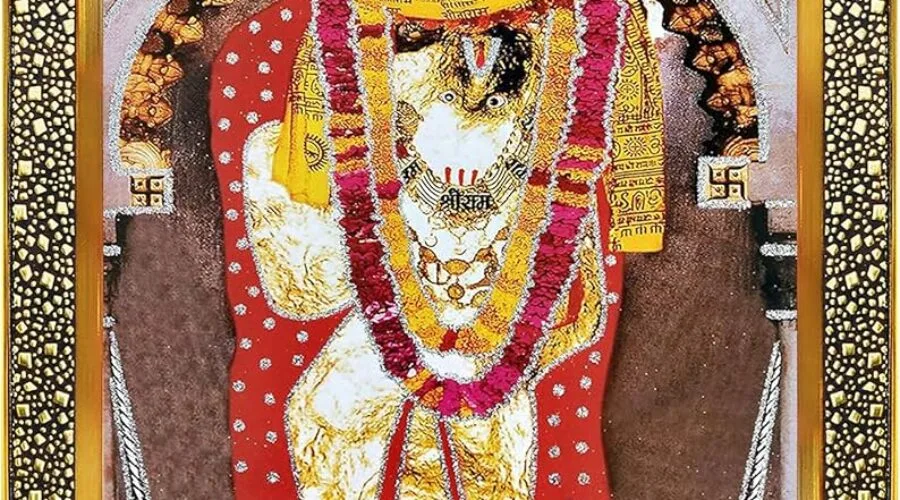
Mehandipur Balaji Temple Dausa Rajasthan
Mehandipur Balaji Temple – A Sacred Center of Spiritual Power
India is home to countless ancient and world-renowned temples, each carrying its own spiritual legacy. Among them, the Mehandipur Balaji Temple holds a unique and powerful place. Located in Mehandipur village of Dausa district, Rajasthan, this sacred Hindu temple is dedicated to Lord Hanuman. Every year, thousands of devotees, saints, and spiritual seekers from India and abroad visit this temple.
More than just a place of worship, Mehandipur Balaji is widely known as a divine center for spiritual cleansing. It is believed to help people affected by negative energies, black magic, and evil spirits, making it one of the most mysterious and spiritually intense temples in India.
History of Mehandipur Balaji Temple
The Mehandipur Balaji Temple is believed to be over a thousand years old. According to traditional beliefs, the idol of Lord Hanuman here is Swayambhu (self-manifested). It is said that Lord Balaji appeared miraculously in the Aravalli Hills, which were once covered with dense forests and wild animals.
The construction of the temple is attributed to Shri Mahant Ji, a revered priest whose ancestors began worshipping Balaji after receiving a divine vision. In this vision, Lord Hanuman instructed them to build a temple in his honor. Over time, the surrounding forest gradually transformed into the village of Mehandipur, and the temple emerged as a powerful spiritual center.
Architecture and Deities of the Temple
Built around the 11th century, the temple showcases traditional Rajput-style architecture, featuring small pillared balconies and intricate artistic details. The temple complex is home to three divine entities:
- Lord Hanuman (Balaji)
- Pret Raj Sarkar (King of Spirits)
- Bhairav Ji
Each of these deities plays a vital role in the temple’s unique rituals associated with spiritual healing and protection.
Spiritual Significance and Beliefs
Mehandipur Balaji Temple is especially famous for its belief in removing evil spirits and curing ailments caused by negative energies or black magic. Because of this reputation, it attracts devotees seeking relief, guidance, and spiritual strength. The intense rituals and strict traditions followed here make it a distinct pilgrimage destination, unlike any other temple in India.
3. Kal Bhairav Temple, Ujjain: The Mysterious Temple Where the Deity Accepts Alcohol
Among the many mysterious temples of India, the Kal Bhairav Temple in Ujjain, Madhya Pradesh, stands apart for a ritual that challenges logic and sparks endless curiosity. Here, devotees offer liquor to the deity, and astonishingly, the alcohol appears to disappear before their eyes. This unusual practice has made the temple one of the most intriguing spiritual destinations in the country.
Dedicated to Kal Bhairav, a fierce manifestation of Lord Shiva and the guardian of time, the temple attracts devotees, researchers, and travelers who seek to understand whether this phenomenon is divine, scientific, or something beyond human explanation.
About Kal Bhairav Temple
Kal Bhairav is worshipped as the protector deity of Ujjain, believed to guard the city from negative forces and unseen dangers. The temple is located on the banks of the Kshipra River, around 8 km from Ujjain Junction railway station. Devotees believe that no religious ritual in Ujjain is complete without first seeking the blessings of Kal Bhairav.
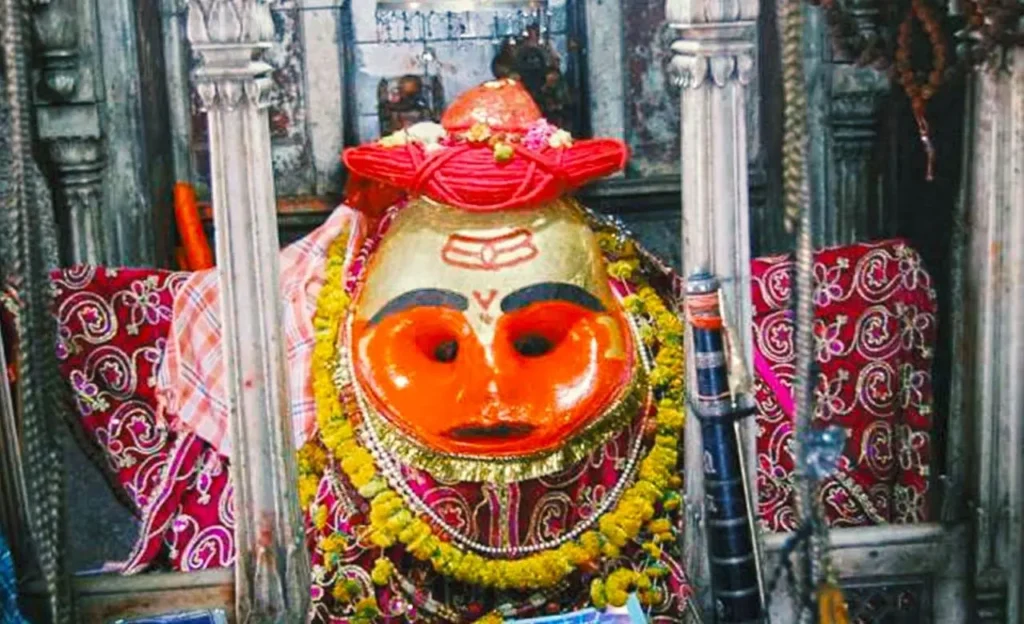
Kaal Bhairav Temple Ujjain
History of the Temple
According to ancient traditions, the Kal Bhairav Temple was originally established by King Bhadrasen in early historical times. The temple finds mention in the Skanda Purana, one of the eighteen major Puranas of Hinduism, highlighting its deep spiritual roots.
The temple also holds a strong connection with Tantric practices, where fierce forms of Shiva and Shakti are worshipped through intense rituals. In the 18th century, the temple underwent restoration under Maratha general Mahadaji Shinde, who also constructed a ghat near the river, enhancing the temple’s prominence.
Temple Architecture
The temple showcases the Malwa style of architecture, marked by the use of red sandstone, domed structures, and intricate carvings. The complex includes a large courtyard, a central sanctum, and several smaller shrines.
The main idol of Kal Bhairav is adorned with a garland of skulls, symbolizing mastery over time and death. The temple walls feature vivid paintings depicting scenes from Hindu mythology, while a massive bell at the entrance is rung by devotees to announce their arrival.
Religious and Cultural Significance
Kal Bhairav Temple is one of the most revered shrines in Ujjain and receives thousands of visitors throughout the year. It holds special importance during the Kumbh Mela, a massive spiritual gathering held once every twelve years, when millions of pilgrims take a holy dip in the Kshipra River.
The temple is also part of the sacred circuit of the eight Bhairava temples of Ujjain, each representing a different aspect of Kal Bhairav. Visiting all eight is considered spiritually powerful.
The Great Mystery: Why Is Alcohol Offered to the Deity?
What makes Kal Bhairav Temple one of the most mysterious temples of India is the centuries-old tradition of offering liquor to the deity. Devotees purchase alcohol from nearby shops or bring sealed bottles and present them to the priest inside the sanctum.
The priest pours the liquor into a metal vessel and places it near the mouth of the idol. Devotees witness, often in disbelief, as the liquid level gradually decreases—appearing as though the deity is consuming it. The remaining liquid is returned as prasadam, believed to carry divine blessings.
Faith, Science, and Unanswered Questions
Over the years, scientists and rational thinkers have attempted to explain this phenomenon. Some theories suggest hidden cavities, absorbent materials, or evaporation processes within the idol. However, none of these explanations have been conclusively proven.
Priests and devotees strongly deny any mechanical or structural intervention, asserting that the idol is solid and untouched. They point out that the amount of liquor consumed varies daily, reinforcing the belief that this mystery cannot be measured by logic alone.
This ongoing debate between faith and science is what makes the Kal Bhairav Temple an enduring enigma.
Why Kal Bhairav Temple Defies Logic and Science
- Alcohol offerings mysteriously reduce without visible explanation
- No confirmed scientific proof despite multiple investigations
- Rituals rooted in Tantra and ancient scriptures
- A deity worshipped as the guardian of time and death
These elements firmly place Kal Bhairav Temple among the 7 mysterious temples of India that defy logic and science.
Visiting Kal Bhairav Temple
Best Time to Visit:
October to March, when the weather is pleasant. Visiting during the Kumbh Mela is considered especially auspicious.
Temple Timings:
5:00 AM to 9:00 PM
Special aartis are held at 7 AM, 12 PM, and 7 PM.
Entry Fee:
No entry fee. Devotees only pay for the liquor they wish to offer.
Final Thoughts
The Kal Bhairav Temple of Ujjain is not just a religious site—it is a living mystery. Whether one believes the phenomenon to be divine or scientific, the experience leaves an unforgettable impression. It stands as a powerful reminder that some truths exist beyond explanation, making it a must-visit among the mysterious temples of India.
4. Kailasa Temple, Ellora: The Most Mysterious Hindu Temple Carved from a Single Rock
Have you ever stood before an ancient monument and wondered how it was created without machines, cranes, or modern tools? That exact feeling overwhelms every visitor who sees the Kailasa Temple at Ellora for the first time. Carved entirely from a single massive rock, this temple feels less like architecture and more like a miracle frozen in stone.
Often described as a stone wonder of the ancient world, Kailasa Temple is one of the most mysterious Hindu temples in India. For travelers, historians, architects, and spiritual seekers, this temple raises one unforgettable question: How was something so grand created more than 1,200 years ago?
This detailed guide covers the history, architecture, mystery, travel tips, and spiritual significance of the Kailasa Temple, helping you plan a smooth and memorable visit.
Kailasa Temple History: A Mystery Etched in Stone
The history of Kailasa Temple is not just about dates and dynasties—it is a story of lost knowledge and unmatched craftsmanship. Located within the Ellora Caves complex, the temple was built during the 8th century CE under the reign of Rashtrakuta King Krishna I.
Inspired by Mount Kailash, the sacred abode of Lord Shiva, the temple was not constructed stone by stone. Instead, it was carved vertically from top to bottom from a single basalt rock. This technique alone makes it one of the most mysterious Hindu temples ever created.
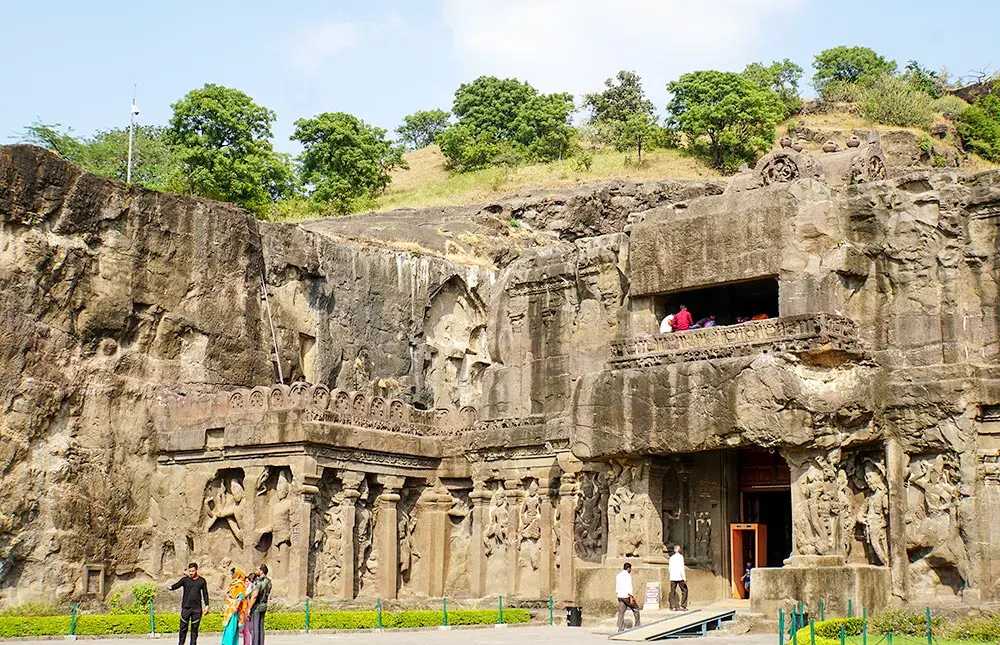
Kailash Temple Maharastra
Despite extensive research, historians still cannot explain:
- How thousands of tons of rock were removed
- What tools were used
- How such symmetry and precision were achieved
Even today, the Kailasa Temple mystery continues to fascinate the world.
Kailasa Temple Architecture: Engineering Beyond Its Time
Walking through Kailasa Temple feels like stepping into an era where art, devotion, and science merged seamlessly. The temple is considered the largest monolithic rock-cut structure in the world, and its design remains unmatched.
Key Architectural Highlights
1. Massive Monolithic Structure
The entire temple—shrines, halls, pillars, sculptures—has been carved from one single rock. Any mistake during carving would have destroyed the structure, yet the execution is flawless.
2. Grand Courtyard and Entrance
A vast open courtyard welcomes visitors, guarded by stone elephants and richly carved walls depicting scenes from Hindu mythology.
3. Pillared Mandapas
Inside, intricately carved pillars show deities, dancers, animals, and mythological scenes. Each pillar tells a story frozen in time.
4. Shiva Shrine and Nandi Mandap
At the heart of the temple lies the Shiva Lingam, with a massive Nandi statue facing the shrine—symbolizing eternal devotion.
5. Towering Height
Standing nearly 100 feet tall, the Kailasa Temple dominates the Ellora landscape, reminding visitors of the scale ancient artisans dared to imagine.
Conclusion: Why Kailasa Temple Is a True Hindu Mystery
The Kailasa Temple is not just a tourist attraction—it is a testament to ancient Hindu knowledge, devotion, and engineering brilliance. Carved from a single rock, untouched by modern tools, and still standing strong after centuries, it rightfully earns its place among the most mysterious Hindu temples in India.
Whether you visit for history, spirituality, architecture, or curiosity, Kailasa Temple promises an experience that will stay with you forever.
5.Puri Jagannath Temple: History, Legends, and Unsolved Mysteries
The Puri Jagannath Temple stands as one of the most sacred and mysterious Hindu temples in India. Located on the eastern coast in Puri, Odisha, this ancient shrine dedicated to Lord Jagannath, along with Balabhadra and Subhadra, is not only a major pilgrimage center but also a place surrounded by enigmas that continue to defy modern science.
From its divine origins and unusual rituals to unexplained natural phenomena, the temple represents a sacred universe where faith, mystery, and ancient knowledge converge. Exploring the history and mysteries of the Puri Jagannath Temple is like stepping into a timeless realm shaped by devotion and cosmic design.
Origins and Mythological History of Puri Jagannath Temple
The story of Lord Jagannath begins long before the present temple structure existed. According to ancient legends, the deity was originally worshipped as Neela Madhava, a radiant form believed to be made of sapphire, hidden deep within a forest and revered by a tribal chief named Vishwavasu.
King Indradyumna, a devoted ruler determined to witness the divine form, sent his priest Vidyapati to locate the deity. Through fate and devotion, Vidyapati married Vishwavasu’s daughter and was secretly taken to the hidden shrine—blindfolded. However, by cleverly dropping mustard seeds along the path, he marked the sacred location.
When the king later arrived, the deity had mysteriously vanished. Sage Narada Muni then appeared and guided the king to build a temple on Nilachala (the Blue Hill). After multiple divine obstacles, the king was instructed to carve new deities from a mystical wooden log found floating in the sea. Thus arose the present-day Jagannath Temple—symbolizing devotion, patience, and divine will.
Unsolved Mysteries of the Puri Jagannath Temple
The Jagannath Temple is revered not only for its spiritual significance but also for its phenomena that remain unexplained even today.
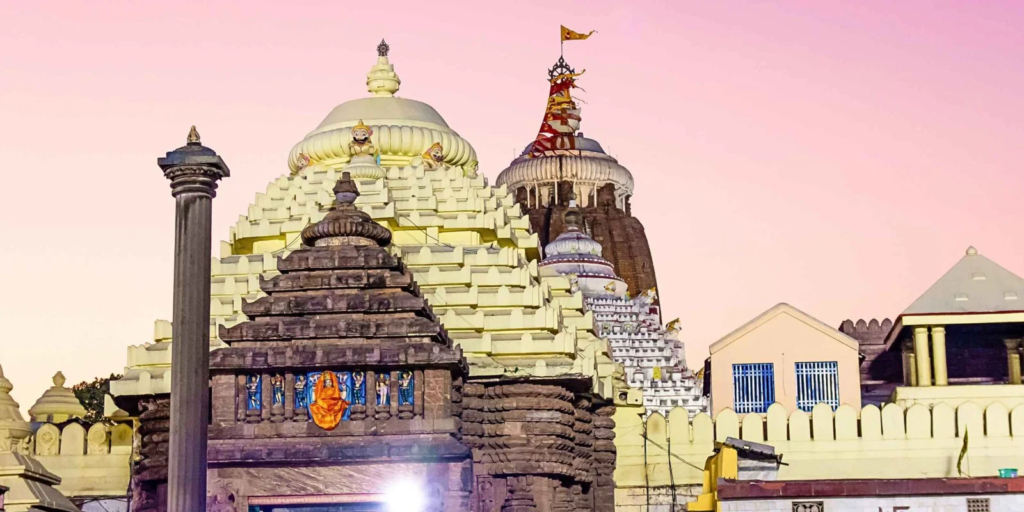
Jagannath Temple Puri
1. The Ever-Defying Temple Flag
Every single day, a priest climbs the towering 214-foot temple spire to change the sacred flag—regardless of weather conditions. What astonishes observers is that the flag always flutters against the direction of the wind. No scientific explanation has conclusively justified this phenomenon, leading devotees to believe it reflects the omnipresent nature of Lord Jagannath.
2. The All-Seeing Sudarshan Chakra
Mounted atop the temple is the massive Sudarshan Chakra, a symbol of divine protection. Remarkably, the chakra appears to face every observer, no matter where they stand in Puri. This optical mystery has puzzled engineers and scientists alike and is believed to safeguard the temple and the entire town.
3. The Forbidden Airspace
One of the strangest mysteries is that no birds or aircraft fly directly above the temple. Despite the temple’s location near the sea, the sky above remains unusually clear. While theories involving magnetic fields exist, none have been scientifically proven, deepening the temple’s mystical reputation.
4. The Divine Logic of Mahaprasad
The temple kitchen is the largest in the world, yet it follows a cooking method that defies logic. Food is prepared in earthen pots stacked vertically, but the top pot cooks first—contrary to physical laws. Additionally, the quantity of Mahaprasad is always perfect—never insufficient, never wasted—regardless of the number of devotees.
5. The Sound Mystery at Singhadwara
At the Singhadwara (Lion Gate), visitors can distinctly hear the roaring sound of ocean waves. However, the moment one steps inside the temple premises, the sound abruptly disappears. This sudden silence is believed to symbolize the transition from the material world into divine stillness.
6. Navakalevara: The Secret Renewal of the Deities
The Navakalevara ritual, conducted every 12 to 19 years, involves replacing the wooden idols with newly carved ones from a sacred neem tree. The most mysterious aspect is the Brahma Parivartan, the secret transfer of divine essence from the old idols to the new. The ritual is conducted in absolute secrecy, and ancient belief states that those who witness it do not live beyond a year—adding to its fearsome sanctity.
Ratha Yatra: The Living Festival of Lord Jagannath
The Jagannath Puri Ratha Yatra is one of the largest and most spiritually charged festivals in the world. Every year, massive chariots carrying Lord Jagannath, Balabhadra, and Subhadra are pulled through the streets by thousands of devotees, symbolizing the Lord’s journey to the Gundicha Temple.
This festival transcends religion, drawing millions from across the globe into a single rhythm of devotion, music, color, and collective faith.
Conclusion: A Temple Beyond Time and Reason
The Puri Jagannath Temple is not merely a religious monument—it is a living mystery that has survived invasions, natural calamities, and centuries of change without losing its divine essence. Its rituals, architecture, and unexplained phenomena continue to challenge rational thought and invite spiritual reflection.
For seekers exploring the mysterious temples of India, Jagannath Puri stands as a powerful reminder that some truths are not meant to be decoded—but experienced.
6. Lepakshi Temple: Mysteries, Legends, and Architectural Wonders
Hidden near the Andhra Pradesh–Karnataka border lies Lepakshi Temple, one of the most enigmatic Hindu temples in India. Surrounded by vast rocky landscapes and open farmlands, this ancient shrine feels almost otherworldly. Mentioned in the Skanda Purana as a Divya Kshetra, Lepakshi is deeply connected to Lord Shiva (Veerabhadra form) and the timeless epic Ramayana.
Lepakshi is not just a place of worship—it is a living museum of unsolved mysteries, divine legends, and architectural brilliance that continues to puzzle historians and scientists alike.
Why Lepakshi Temple Is Famous Across the World
Lepakshi Temple has earned global recognition due to its miraculous structures, gravity-defying pillars, Ramayana associations, and unexplained phenomena. Its proximity to Bengaluru makes it accessible, yet it remains blissfully uncrowded—an offbeat spiritual destination.
What truly sets Lepakshi apart are the multiple mysteries located within a single temple complex, something rarely seen elsewhere in India.
The Greatest Mysteries of Lepakshi Temple
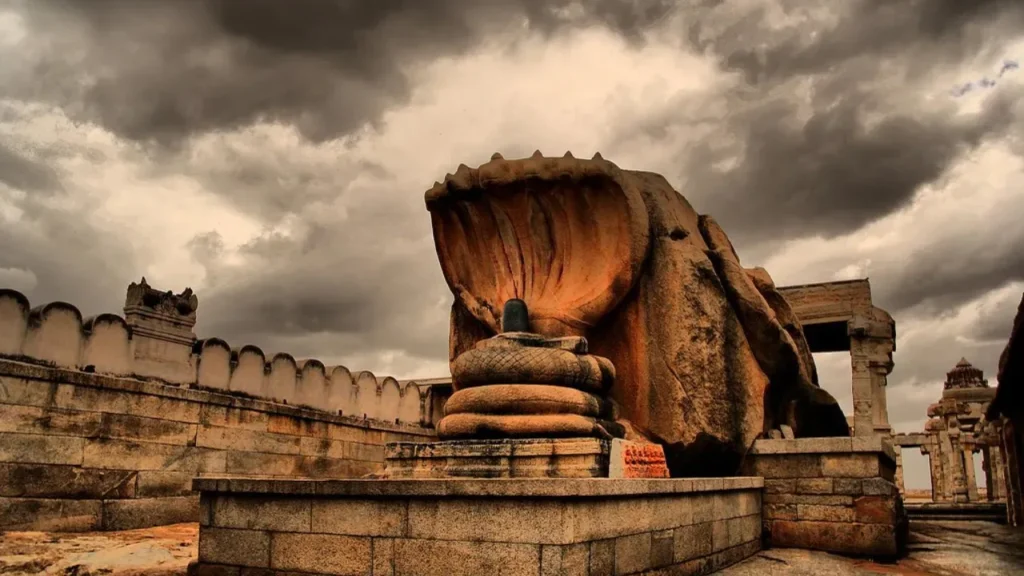
Lepakshi Temple
1. The Hanging Pillar (Antariksha Stambha)
Among the 70 stone pillars inside the Veerabhadra Temple, one pillar does not touch the ground. A thin cloth or paper can easily pass beneath it, proving the gap. Despite centuries of study, no scientific explanation has fully decoded how this pillar has remained suspended without collapsing.
An attempt by British engineers in the early 1900s to investigate it reportedly caused the temple to shake, forcing them to abandon the effort.
2. The Giant Footprint of Goddess Sita
Inside the temple courtyard lies a 2.5-foot-long footprint, believed to belong to Maa Sita, known locally as Sitamma Padalu. What deepens the mystery is the constant flow of water emerging from the footprint—its source remains unknown even today.
Devotees believe this spot marks where Sita rested during her abduction by Ravana.
3. The Bleeding Eye Marks of Virupanna
On one of the temple walls are two reddish stains, believed to be the eyes of Virupanna, one of the temple’s builders. Legend says he blinded himself after being falsely accused of misusing royal funds.
Even today, the stains darken during festivals like Dussehra, and local belief holds that the spirit of Virupanna still guards the temple.
4. The Massive Nagalinga
Near the hanging pillar stands a colossal Shivling protected by a seven-headed serpent (Nagalinga), carved from a single stone. Cracks on the idol render it unsuitable for worship, yet its presence adds to the mystical aura.
Local folklore says it was carved in a single day by sculptors waiting for their meal—an act of spontaneous divine inspiration.
5. The Incomplete Kalyana Mandapa
The wedding hall, or Kalyana Mandapa, remains unfinished to this day. One legend claims construction was halted on royal orders; another says divine forces stopped it.
Local belief holds that Shiva and Parvati would have been married here had it been completed—making its incompletion a sacred mystery.
6. The Colossal Jatayu Statue
Perched atop a rocky hill, the massive statue of Jatayu, the divine bird from Ramayana, overlooks Lepakshi village. It commemorates the spot where Jatayu fell after battling Ravana to save Sita.
This connection gives Lepakshi its name—derived from “Le Pakshi”, meaning “Rise, O Bird.”
7. India’s Largest Monolithic Nandi
Located a short walk from the temple is one of the largest monolithic Nandi statues in India, carved from a single granite block. Measuring 27 feet in length, Nandi silently faces the Veerabhadra Temple, symbolizing eternal devotion.
Veerabhadra Temple: History and Architecture
Constructed in 1583 CE during the Vijayanagara Empire by brothers Viranna and Virupanna, the temple is dedicated to Veerabhadra, the fierce manifestation of Lord Shiva.
The temple stands on Kurma Shaila (Tortoise Hill) and is a masterpiece of Vijayanagara architecture, featuring expansive courtyards, ornate pillars, and detailed sculptures.
Marvelous Lepakshi Murals and Carvings
The ceilings and walls are adorned with some of the finest murals in South India, depicting scenes from the Ramayana, Mahabharata, and Puranas. The most remarkable mural is the giant Veerabhadra painting, believed to be the largest single-panel mural in Asia.
Natural pigments were used, and small holes near the murals served as ancient color palettes.
Spiritual Harmony: Shaivism and Vaishnavism Together
Lepakshi uniquely honors both Shaiva and Vaishnava traditions. Two Shivlings—one Shaiva, one Vaishnava—are worshipped side by side, symbolizing unity in Hindu philosophy.
Festivals and Rituals at Lepakshi
Major festivals celebrated here include:
- Mahashivratri
- Dussehra
- Diwali
- Annual Lepakshi Festival (2–3 days celebrating art & heritage)
Essential Visitor Information
- Location: Anantapur district, Andhra Pradesh
- Temple Timings: 6:00 AM – 6:00 PM
- Entry Fee: Free
- Dress Code: Modest clothing required
- Best Time to Visit: October to February
- Photography: Allowed except in sanctum areas
Why Lepakshi Temple Is Truly in Mysterious Temples of India
Lepakshi Temple seamlessly blends mythology, unexplained science, devotion, and artistic excellence. Despite being centuries old, its mysteries remain untouched by time.
For seekers exploring the mysterious temples of India, Lepakshi is not just a destination—it is an experience that challenges logic and deepens faith.
7. Ramanathaswamy Temple, Rameswaram – The Endless Corridor Mystery
Located on Rameswaram Island, Tamil Nadu, the Ramanathaswamy Temple is one of the 12 Jyotirlingas of Lord Shiva and also one of the most architecturally puzzling temples in the world.
Why It Is Mysterious
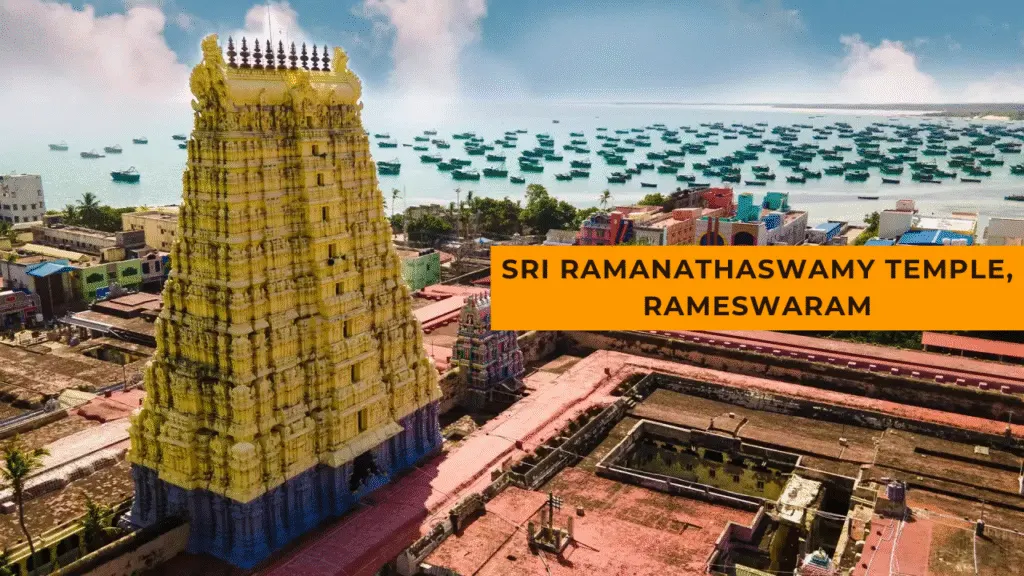
1. World’s Longest Temple Corridor
- The temple has the longest corridor among all Hindu temples
- It stretches over 1,200 meters with 1,212 massive granite pillars
- Every pillar is perfectly aligned, identical in height and symmetry
- Built centuries ago without modern surveying tools
Modern architects still struggle to explain how such precision was achieved.
2. 22 Wells with Different Water Taste
- Inside the temple are 22 holy wells (Teerthams)
- Each well contains water with different taste, temperature, and mineral content
- All wells are located within a small area and connected underground
- No scientific explanation exists for the sudden change in water quality from one well to another
3. Sea-Level Temple That Never Floods
- Despite being located close to the ocean, the temple never gets flooded
- During cyclones and tsunamis, the sanctum remains protected
- Devotees believe an invisible divine shield guards the temple
4. Ramayana Connection
- It is believed Lord Rama worshipped Shiva here to absolve the sin of killing Ravana
- The Shiva Lingam here is said to be made of sand by Goddess Sita
Why Ramanathaswamy Temple Is Truly Mysterious
This temple combines spiritual purification, sacred geometry, and unexplained hydrology in one place. It stands as a reminder that ancient Indian temple builders understood space, energy, and water systems at a level we are still trying to decode.
Frequently Asked Questions (FAQs)
Why are Indian temples often described as mysterious?
Indian temples are called mysterious because many of them combine unexplained architectural feats, ancient rituals, cosmic alignments, and spiritual phenomena that modern science has not been able to fully explain. Faith, symbolism, and advanced ancient knowledge intersect in these sacred spaces.
What is the spiritual significance of Ambubachi Mela at Kamakhya Temple?
Ambubachi Mela represents the annual menstrual cycle of Goddess Kamakhya, symbolizing fertility, creation, and the power of the feminine divine. The temporary closure of the temple reflects deep tantric beliefs unique to Shakta traditions.
Why is Mehandipur Balaji Temple considered a powerful spiritual center?
Mehandipur Balaji Temple is believed to be a center for liberation from negative energies, spirit possession, and black magic. The intense rituals and strict spiritual discipline followed here make it one of India’s most enigmatic temples.
Why is alcohol offered at Kal Bhairav Temple in Ujjain?
Alcohol is offered to Kal Bhairav as a symbolic ritual representing ego surrender and tantric tradition. The belief that the deity accepts the offering directly remains one of the temple’s greatest mysteries.
How was the Kailasa Temple carved from a single rock?
The Kailasa Temple was carved top-down from a massive basalt rock using ancient techniques that remain unknown today. The precision, scale, and symmetry achieved without modern tools continue to astonish engineers and historians.
What makes the Puri Jagannath Temple scientifically mysterious?
Several phenomena—such as the reverse-flowing flag, the disappearing ocean sound, and the Sudarshan Chakra’s visual illusion—defy conventional logic, making the temple a subject of ongoing curiosity.
Why is Lepakshi Temple famous for architectural mysteries?
Lepakshi Temple is renowned for its hanging pillar, massive monolithic sculptures, unfinished mandapas, and murals. These features demonstrate advanced engineering and symbolic artistry beyond their time.
What is the mystery of Ramanathaswamy Temple’s endless corridor in Rameswaram?
Ramanathaswamy Temple houses the world’s longest temple corridor, stretching over 1,200 meters with perfectly aligned pillars. The symmetry, acoustic properties, and structural stability achieved centuries ago remain an architectural marvel.
Is there a connection between science and faith in these temples?
Yes, many temples reflect deep knowledge of astronomy, geometry, acoustics, and energy flow. While science explains parts of these structures, faith fills the gaps where logic ends.
Why do these temples continue to attract millions of devotees today?
Beyond mystery and history, these temples offer spiritual experiences that create deep emotional and devotional connections, making them timeless centers of worship.