
Tantras: The Sacred Unity of the Inner and Outer Universe
Tantra presents a profound vision of existence where the universe is reflected within the individual, and the individual is inseparable from the universe itself. According to Tantric wisdom, the same forces that move the cosmos on a vast scale also operate within the human system on a subtle level. There is no division between the universal consciousness and the individual being—both arise from the same source and exist as one continuous reality.
Human limitation arises when life is viewed in fragments—when the body, mind, energy, and cosmos are seen as separate entities. Tantra removes this separation by guiding the seeker toward the recognition of wholeness, where every part is connected and sustained by an underlying unity. Fulfillment, in Tantra, comes through the realization of this inseparable relationship between the microcosm and the macrocosm.
To awaken this understanding, Tantric knowledge expresses itself through sacred forms, symbols, and visual metaphors. These are not mere artistic representations but powerful tools for inner realization. Within the Tantric tradition, spiritual expression is primarily revealed through three symbolic dimensions:
- Yantras – sacred geometric forms that embody divine energies
- The Human Body – understood as a living map of the universe
- Iconographic Forms – visual manifestations of cosmic principles
At Aghordham, Tantra is honored as a spiritual science of integration, guiding seekers to experience the unity of self and cosmos through disciplined practice, awareness, and the blessings of Guru Kaushiknath Ji Maharaj.
Tantras: Its Sacred Origins and Living Tradition
By Acharya Bhagwandas Ji | Aghordham
Understanding Tantra Beyond Myths and Misconceptions
At Aghordham, Tantra is not viewed as a mystery to be feared or a practice to be sensationalized. It is understood as a sacred science of consciousness, a disciplined spiritual path designed to awaken higher awareness through precise energy management.
In modern times, Tantra has often been misunderstood. In Western culture, it is frequently reduced to a narrow idea of sensual spirituality. In the East, it is sometimes perceived as secretive or extreme due to its powerful rituals and unconventional symbolism. The truth, however, lies far deeper.
Tantra is a complete spiritual system—ancient, profound, and transformative—rooted in India’s earliest wisdom traditions and preserved through authentic lineages.
Vedic Foundations: The Seed of Tantras
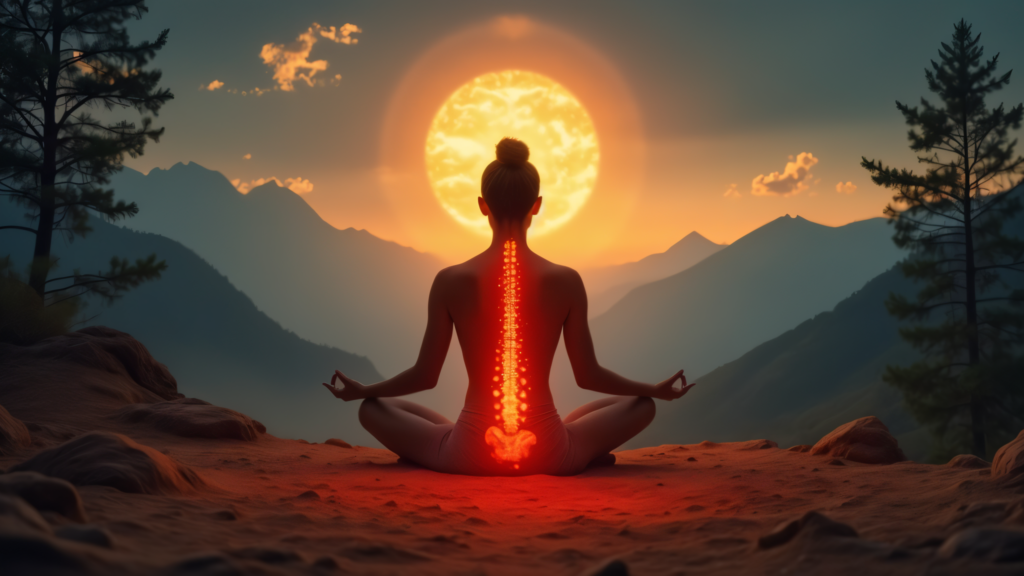
The word Tantra originates from the Sanskrit root tan, meaning to expand, to weave, or to extend. Tantra is the method through which the individual expands awareness and weaves personal consciousness into the universal flow.
Tantric wisdom did not arise in isolation. Its earliest foundations are found in the Vedic worldview, especially in the subtle sciences of mantra, ritual, and cosmic order. While the Vedas do not define Tantra as a separate path, they establish the philosophical ground upon which Tantric knowledge later unfolded.
The Atharva Veda is particularly significant, containing early references to mantras, protective rituals, healing practices, and energy invocation—elements that later became central to Tantric sadhana.
At Aghordham, Tantra is honored as the natural evolution of Vedic inner sciences, refined through direct experience rather than belief alone.
The Five Sacred Streams of Vedic Tantra
As Tantra evolved, it expressed itself through distinct spiritual streams, each aligned with a divine principle. These paths are not divisions, but different gateways to the same ultimate truth.
Vaishnava Tantra
This path centers on Lord Vishnu, representing preservation, harmony, and cosmic order. Vaishnava Tantra emphasizes devotion infused with mantra, ritual discipline, and meditative visualization, guiding the seeker toward surrender and unity with the sustaining force of existence.
Shaiva Tantra
Shaiva Tantra forms the philosophical backbone of many Tantric systems. Lord Shiva is worshipped as pure consciousness, while Shakti is recognized as dynamic energy. Practices include Kundalini awakening, mantra sadhana, mudras, and deep meditation, all aimed at realizing the union of awareness and power.
Shakta Tantra
Shakta Tantra reveres the Divine Mother as the source of creation, movement, and transformation. It acknowledges that all cosmic activity flows from Shakti. Rituals, mantras, yantras, and inner worship are used to awaken dormant energies and align the practitioner with universal intelligence.
Ganapatya Tantra
Focused on Lord Ganesha, this tradition addresses both spiritual and worldly obstacles. Through mantra chanting, offerings, and focused meditation, practitioners cultivate clarity, stability, and wisdom—essential foundations before higher spiritual ascent.
Saura Tantra
Saura Tantra honors Surya, the Sun, as the visible form of divine consciousness. Solar practices such as Surya Namaskar, mantras, and meditative absorption are used to awaken vitality, inner illumination, and disciplined awareness.
Tantra in Buddhism: Vajrayana and Conscious Transformation
Tantric wisdom transcended religious boundaries and became an integral part of Vajrayana Buddhism, which emerged in India around the 7th century.
In Vajrayana, Tantra is a direct path of transformation. Rather than suppressing human emotions and instincts, it teaches how to consciously refine them. Desire, fear, and ignorance are not rejected but transformed into wisdom through disciplined practice.
Mantras, mandalas, mudras, and deity visualizations are used to reprogram perception. By meditating upon enlightened forms (yidams), practitioners internalize higher states of consciousness and accelerate spiritual realization.
This approach resonates deeply with Aghordham’s understanding of Tantra as a science of transmutation, not escapism.
Tantra and Secrecy: Why It Was Guarded
Tantra has long carried an aura of secrecy—not to confuse society, but to protect the unprepared.
Certain Tantric practices, especially those of Vamachara (left-hand path), challenge social conditioning and ego identity. These methods were traditionally transmitted only from Guru to disciple, ensuring discipline, purity of intent, and psychological readiness.
Misinterpretation—especially the overemphasis on sexual symbolism—has distorted Tantra’s image. At Aghordham, Tantra is approached with responsibility, ethical grounding, and spiritual maturity, preserving its sacred intent.
Great Masters Who Preserved Tantric Wisdom
Several realized masters shaped Tantra into a living tradition:
- Abhinavagupta – The Kashmiri Shaiva master who unified philosophy, devotion, and ritual in his monumental work Tantraloka.
- Matsyendranath – A Mahasiddha who bridged Tantra and Yoga, laying foundations for Hatha Yoga and the Nath tradition.
- Padmasambhava (Guru Rinpoche) – The torchbearer of Vajrayana Tantra, who established Tantric Buddhism in Tibet through direct realization.
Sacred texts revered in authentic Tantric study include:
- Vijnana Bhairava Tantra
- Kularnava Tantra
- Guhyasamaja Tantra
These texts emphasize experience over theory, a principle central to Aghordham’s spiritual work.